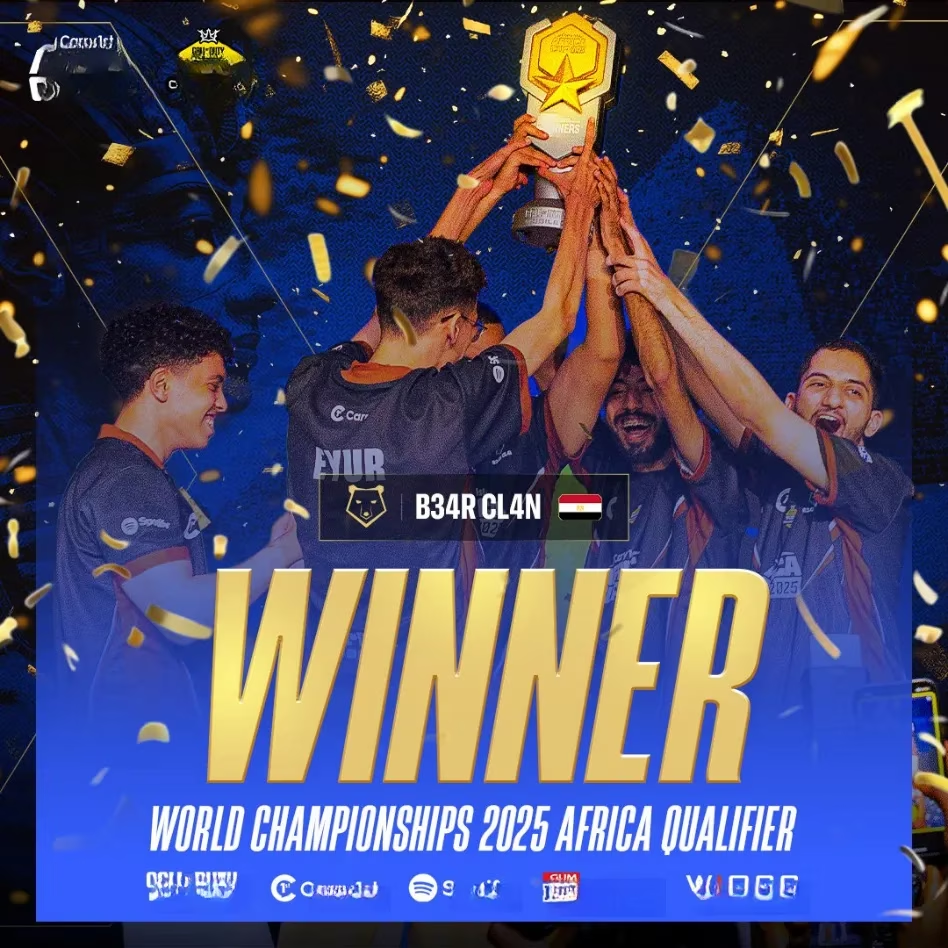
The final match had concluded, the confetti had settled, and the digital roar of the crowd was slowly fading. For the players of Bear Clan, the moment was surreal—they were champions of the 2025 Carry1st Africa Cup, and with that victory, they had secured a ticket to the global stage. This wasn't just another tournament win; it was a declaration. The entire event served as a watershed moment, a clear signal that African esports had arrived and was ready to demand its place in the worldwide conversation. As one chapter closed with the Africa Cup's conclusion, another began with the imminent World Championships, prompting a deeper reflection on the tournament's profound and lasting impact on the gaming landscape across the continent.
A Market Coming of Age 🚀
The past decade has been a story of quiet, relentless growth for African gaming. The Carry1st Africa Cup didn't create this momentum, but it brilliantly harnessed it, acting as a key catalyst at the perfect time. According to the latest industry projections, Africa continues to hold its title as the world's fastest-growing gaming market, with revenues now firmly on track to surpass the $1.8 billion mark in 2026. This explosive expansion isn't magic; it's built on a foundation of skyrocketing smartphone adoption, rapidly improving internet infrastructure, and, most importantly, a passionate and ever-growing community of gamers. The Africa Cup arrived precisely as this market was coming into its own, offering a professional, high-stakes platform where homegrown talent could finally be seen and celebrated on their own terms. The tournament's impressive $15,000 prize pool was more than just money—it was a tangible indicator of the increasing commercial viability and serious investment starting to flow into the region's competitive scene.
Proving Ground for Champions 🏆
Finances tell one story, but legacy is written by people. The true heart of the Cup's impact lies in the platform it provided for African players to shine. Bear Clan's decisive victory was the headline, but the fierce competitiveness shown by squads like Sierra7 and Paradox painted a fuller picture. Together, they delivered undeniable proof that African teams possess the skill, strategy, and tenacity to go toe-to-toe with the world's best. For these players, the tournament was an unprecedented gateway to global visibility.
-
From Underdogs to Contenders: For too long, African teams were viewed as underdogs or afterthoughts in global esports narratives. Bear Clan's triumph, and their ensuing qualification for the 2025 Call of Duty: Mobile World Championship, has forcefully rewritten that script. It marks a definitive turning point, demonstrating that the continent can not only participate but produce genuine championship-caliber teams.
-
A Scout's Paradise: The tournament transformed into a premier showcase for international talent scouts and sponsors. With the eyes of the global esports ecosystem watching, African players now have dramatically greater opportunities. The path to securing endorsements, earning spots in prestigious international leagues, and building sustainable careers within the industry has become significantly clearer.
The Road Ahead: Challenges and Opportunities ⚙️
Yet, for all its success, the Africa Cup also cast a sharp light on the persistent hurdles that African esports must still overcome. The celebration is real, but the journey is ongoing, and the path forward requires addressing some fundamental issues.
Infrastructure, particularly internet connectivity, remains a formidable challenge. While mobile networks have improved, many gamers across the continent still battle high ping rates and inconsistent connections, creating a tangible competitive disparity with players in regions with more developed digital infrastructures. Tournament organizers like Carry1st have made commendable efforts to mitigate these issues, but widespread, reliable, low-latency internet is the essential bedrock for future growth.
Furthermore, while the Cup itself attracted solid sponsorship, the broader African esports ecosystem still grapples with securing consistent, high-value investment. Many local teams and tournaments operate without the financial safety nets common in North America or Europe. Attracting increased investment from both local giants and global brands is not just beneficial—it's critical for long-term sustainability and professionalization.
Perhaps most crucial is the need for structured player development. The raw talent is undoubtedly there, as the Cup proved, but many countries lack formal esports academies, coaching programs, and grassroots competitive circuits to nurture that talent from a young age. Investing in these developmental pipelines is the key to ensuring a steady stream of world-class players and preventing talent drain.
More Than a Game: Building a Cultural Movement 🌍
Ultimately, esports transcends the games themselves. It's about community, shared identity, and cultural pride. This is where the Carry1st Africa Cup may have left its deepest mark. By uniting players from across the continent under the banner of Call of Duty: Mobile, the tournament fostered a powerful sense of shared purpose and belonging. Teams like Nigeria's Eclipse Gaming and Sierra7 have become local heroes, while Bear Clan and Paradox have earned the respect of fans far beyond their home borders.
In a continent where traditional sports like football have long dominated, esports is now carving out its own space as a legitimate and exciting avenue for competition and aspiration. The successes of these players have ignited the imaginations of a new generation, proving that glory can be found not just on the physical pitch, but on the digital battlefield as well. The Africa Cup helped transform esports from a niche hobby into a source of continental pride.
As the dust settles on the 2025 Carry1st Africa Cup, its legacy is crystal clear. The tournament provided the stage, amplified the talent, attracted crucial investment, and, most importantly, laid a robust foundation for the future. Bear Clan's journey to the World Championship is just the beginning. The road ahead is long and lined with challenges, but one thing is now undeniable: African esports has found its voice, and the world is listening. The Carry1st Africa Cup has indelibly etched its mark, proving that Africa is not just ready to compete on the world stage—it's ready to win.