Four years ago, Call of Duty Mobile embarked on one of its most atmospheric seasonal journeys with the arrival of Season 4 2022, officially codenamed Wild Dogs. Launched globally in late April 2022, the update transported players into a merciless desert theater where nature itself became a formidable adversary. The marquee addition, a sandstorm-laced Battle Royale transformation, recontextualized survival in ways that still resonate with veteran Operators in 2026. Rather than simply introducing new firearms, Wild Dogs merged environmental storytelling, tactical map design, and a raw survivalist aesthetic into a cohesive package that would influence future seasons.
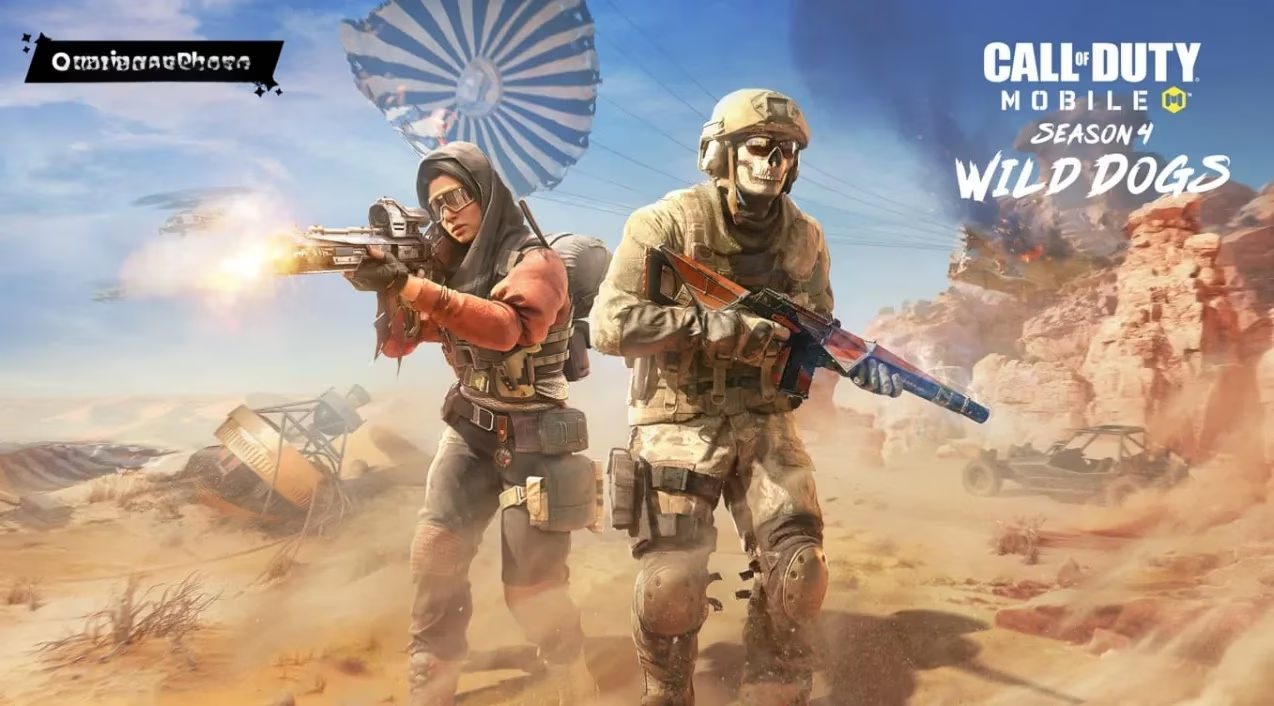
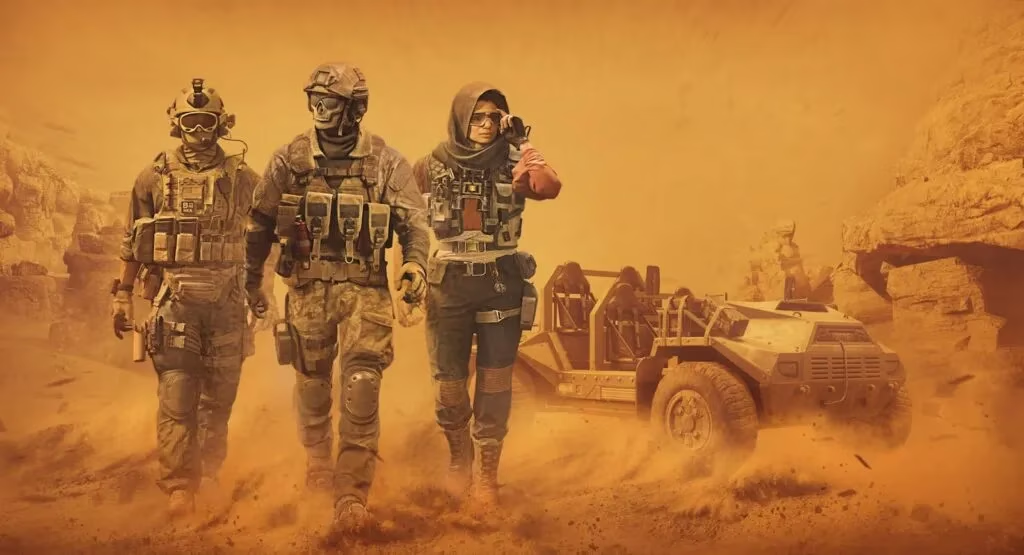
The Wild Dogs Battle Pass arrived on April 28, 2022, offering 50 tiers of free and premium content. Anchoring the reward stream were four distinct Epic Operators: Farah – Desert Sentinel embodied the rugged survivor archetype, while Ghost – Apparition brought a spectral counterpoint to the sun-scorched theme. Roze – Sand Dune and the returning Roach completed the roster, each exuding a battle-hardened persona that matched the arid environment. The premium track also featured meticulously designed Weapon Blueprints, including the AS VAL – Heat Shield with its thermal-resistant plating, the Swordfish – Arid Shroud draped in desert camouflage, the QXR – Sandpike optimized for high mobility, and the bolt-action Koshka – Skiff Shot that would become a staple in sniper loadouts. Seasonal camos from the Green Rust and Sand Tracks families rounded out the cosmetic offerings, giving even free-to-play soldiers a taste of the weathered frontier.
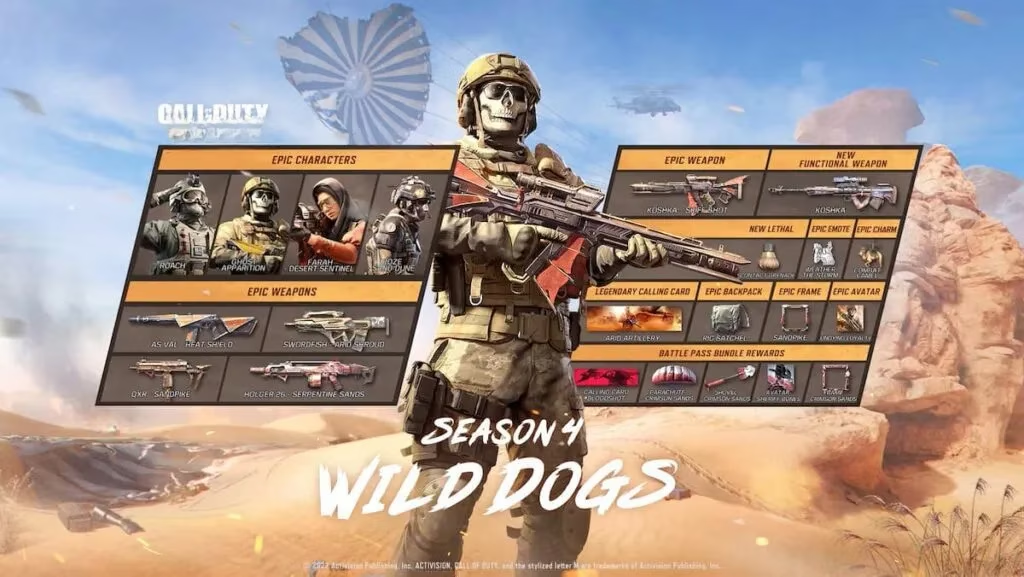
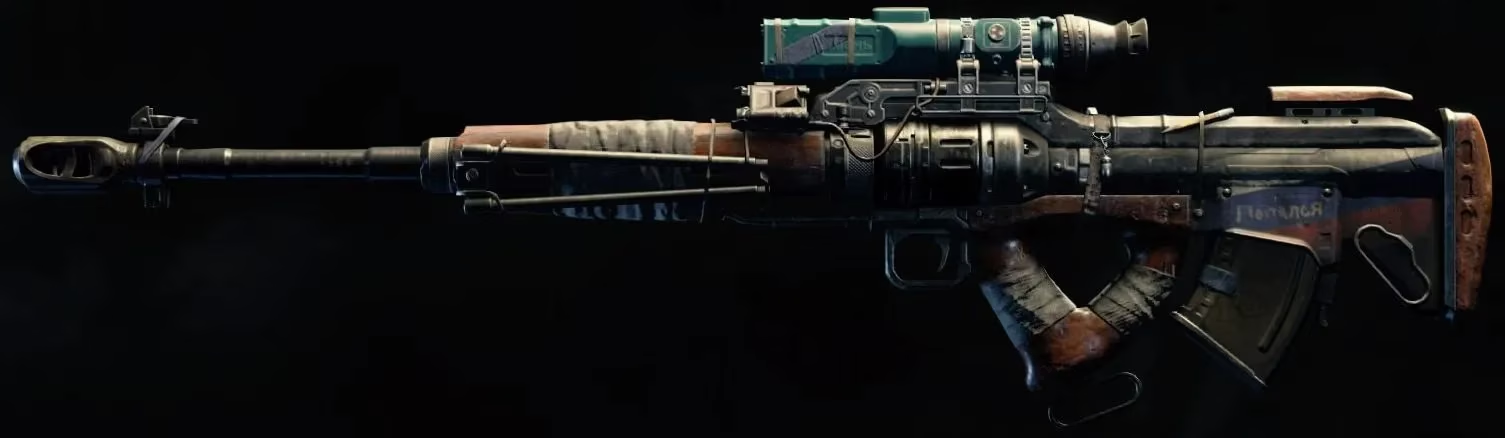
Weapon enthusiasts immediately gravitated toward the Koshka, a functional sniper rifle unlocked at Tier 21. Positioned as a lethal bolt-action platform, the rifle distinguished itself with a faster aim-down-sight speed and a snappier rate of fire than the hard-hitting but sluggish Rytec AMR. Through the Gunsmith system, marksmen could reshape the Koshka into a fast-handling, mobile configuration suited for aggressive quickscoping, or reinforce it into a highly stable, devastating kit capable of one-shot eliminations at extreme ranges. Accompanying the Koshka was the Contact Grenade, a new lethal equipment piece that detonated instantly upon hitting any surface. Available from Tier 14, the Contact Grenade eliminated the cooking latency of traditional fragmentation grenades, rewarding accurate lobs with instantaneous area denial — a subtle but significant shift in multikill potential during objective modes.
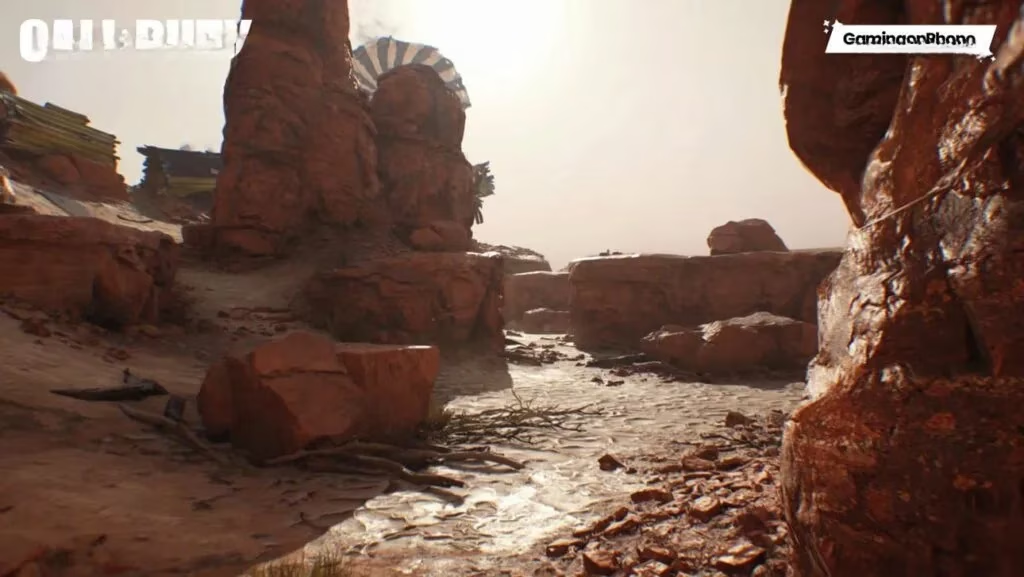
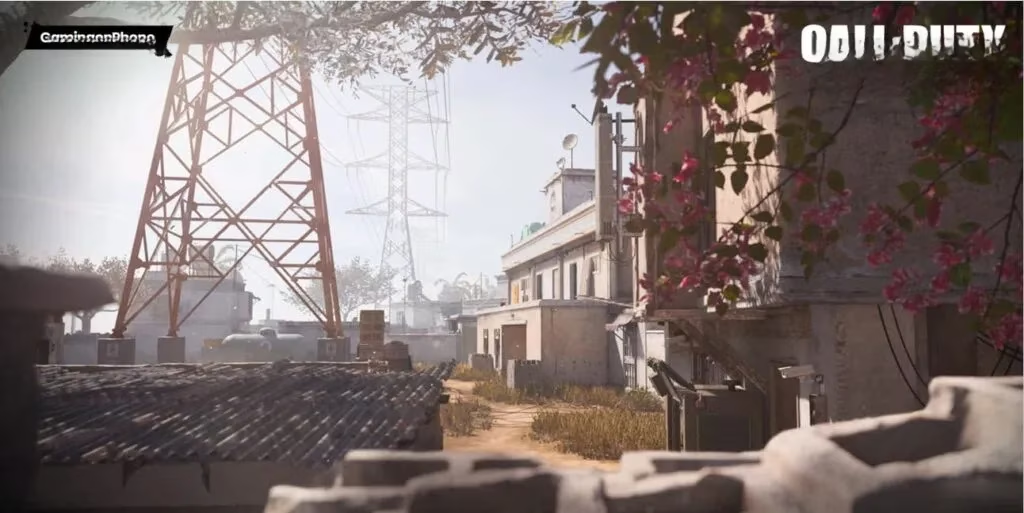
The multiplayer landscape expanded considerably with the addition of Satellite, a map split into two starkly contrasting biomes. On one side, exposed desert dunes carved natural corridors for vehicles and long-range duels. On the other, winding caverns within rocky crags fostered close-quarters ambushes — a duality that forced teams to adapt loadouts on the fly. Satellite launched as one of the largest maps in the game at the time, joining the ranks of Miami Strike and Hacienda. Its vehicular layer, which included SUVs fitted with mounted machine guns, bikes, and tanks, foreshadowed the combined-arms design philosophy that later seasons would adopt more broadly. Alongside Satellite, Khandor Hideout delivered a narrative-rich battlefield set in a town overtaken by Al-Qatala forces. Thirteen distinct zones — from the Arch Coalition Spawn to the Security Allegiance Spawn — partitioned fights into recognizable sectors, while landmarks such as the Research Lab, Market, Garage, and Signal Tower rewarded map knowledge with flanking routes and vantage points.
Season 4 also inaugurated 12v12 Ground War on Satellite and Aniyah Incursion. Six capture points dotted each map, demanding squad coordination to reach the 300-point threshold. Motorbikes, antelopes, ATVs, and tanks ferried Operators across sprawling lanes, while the larger team counts generated a front-line chaos reminiscent of classic Battlefield encounters. The mode’s success in Wild Dogs proved that mobile players embraced expanded lobby sizes, a trend that subsequent seasonal updates would continue to nurture.
Battle Royale underwent a radical metamorphosis with the introduction of roaming sandstorms. Instead of a simple visual effect, the sand wall dynamically rolled across the map, cutting visibility and punishing unprepared travelers. Yet braving the storm offered disproportionate rewards: high-tier loot and thermal scopes appeared more frequently inside the maelstrom, turning the hazard into a risk-reward gambit. Dust devils added a physical threat, flinging players who wandered too close, while the new Turbulence Generator — a throwable that created a sustained windstream — gave tactical squads a tool to manipulate movement both inside and outside the storm zone. Class abilities also received targeted buffs: the Trap Master no longer damaged its own user and gained an increased slowing effect, the Medic obtained a second charge upon upgrade alongside accelerated health regeneration, and the Rewind class benefited from greatly enhanced charging speed and an extended lookback time.
Complementing these gameplay overhauls, the Sandstorm’s Eye themed event presented a mission map dotted with nodes like the Observation Tower, Great Bridge, and Logistics Station. Operators who navigated these objectives earned substantial Battle Pass XP and exclusive cosmetics. Daily missions funneled participants directly into the sandstorm’s heart, while the event leaderboard rewarded top performers with the Otter – Sand Drift Operator skin and the Locus – Side Swindler sniper rifle blueprint.
Multiplayer Tournament Mode also debuted, providing a structured warm-up environment for Ranked Play and the World Championship ecosystem. Elite competitors grinding the rolling leaderboard could secure the Epic DL Q33 – Red Sprite and Shadow Blade – Red Sprite, establishing prestige rewards that motivated consistent engagement.
The weapons balancing pass accompanying Wild Dogs was one of the most comprehensive tune-ups observed in the game’s lifecycle at the time. Several adjustments echoed principles still referenced by balance analysts in 2026:
-
Disable Perk Overhaul: The perk’s effectiveness was reduced for assault rifles (whole body to lower body) while expanded for sniper and marksman rifles (lower body to whole body). Movement speed and ADS movement speed debuffs were softened, repositioning Disable as a supportive tool rather than a dominant dueling crutch.
-
Kilo 141 Rebalancing: Head damage multipliers and shooting range were trimmed to curb its overwhelming time-to-kill dominance among assault rifles.
-
PDW-57 Resurgence: Range and ADS spread received buffs, and leg/hip damage multipliers increased, restoring viability for a weapon that had fallen out of favor.
-
LMG Quality-of-Life Adjustments: ADS speed saw across-the-board improvements for machine guns, while the RPD specifically gained increased medium-to-long-range damage to revive its suppressive identity.
-
Chicom Modernization: Magazine capacity increased across all variants, accompanied by higher mid-range damage and amplified head and upper-arm multipliers, rewarding practiced burst-fire control.
-
M21 EBR Multiplayer Revival: Upper chest and arm damage multipliers were elevated, enabling a one-shot kill to the upper body at close ranges in Multiplayer, while mid-range lower-body damage was reduced to raise skill requirements in Battle Royale.
-
Shorty Stabilization: Projectile dispersion was tightened for more consistent medium-short-range performance, and weapon-switching, reload, and sprint-to-fire delays were cut to strengthen its role as a sniper’s backup.
Battle Royale armaments underwent a holistic rework aimed at diversifying engagement distances. SMG hip-fire accuracy decayed during sustained fire to mimic rifle behavior, while damage falloff was removed beyond 25 meters for weapons like the AK-47, M4, KN-44, RPD, and Holger 26, among others. Sniper and marksman rifles collectively received damage improvements to make ranged combat a more attractive alternative to the prevailing close-quarter meta.
The Store celebrated Golden Week by re-releasing seven popular Crates on a rotating daily schedule, each available at a discount for three days. New Draws aligned with the desert theme, presenting Legendary Operator Skins like Phantom – Osiris, FTL – Marauder, and Maxis – Dark Aether, as well as Legendary Blueprints for the MX9, ICR-1, and the newly introduced Kali Sticks and Koshka.
Looking back from 2026, Season 4 Wild Dogs stands as a turning point where Call of Duty Mobile embraced environmental hazards as core gameplay mechanics rather than cosmetic backdrops. The sandstorm’s blend of danger and opportunity, the dual-biome Satellite map, the 12v12 vehicular warfare, and the sweeping weapon rebalancing collectively pushed the title toward greater strategic depth. Many of the systems refined during that desert campaign — class charge economy, attachment calculations for hip-fire, and map-agnostic damage falloff curves — continue to shape the mobile shooter landscape half a decade later.