Back in late 2023, the Call of Duty Mobile esports scene witnessed a fresh, electrifying chapter as the Snapdragon Pro Series Season 4 rolled out across every major region. Driven by ESL’s production muscle and backed by Qualcomm’s signature sponsorship, the tournament didn’t just offer another prize pool — it reshaped the way mobile competitors climbed from bedroom warriors to stage-slaying legends. The air buzzed with a rare kind of energy, the kind that whispers, “This is your shot,” and for thousands of players, that whisper turned into a roar.
The competition arrived at a perfect moment, running alongside the high-stakes COD Mobile World Championship 2023, but carving out its own identity — more gritty, more sudden, and in some ways, more personal. While the World Championship represented the ultimate summit, the Snapdragon Pro Series felt like a living, breathing ladder where every rung demanded blood, sweat, and an unhealthy amount of hip-fire accuracy. Gamers who never dreamed of a signed jersey suddenly found themselves in lobbies with region-topping pros, and let’s be honest, that’s the kind of chaos that makes esports genuinely beautiful.
From the very first bullet fired in the In-Game Qualifiers, it was clear this wasn’t going to be a casual stroll through Ranked matches. The system knitted together over 128 hopeful squads from regions spanning Europe, North America, Latin America, Asia Pacific Japan, China, and India — a sprawling tapestry of playstyles, languages, and midnight grind sessions. Teams clawed for qualification points based on individual ranks, and pressure mounted in ways that turned calm-voiced shotcallers into hoarse screamers. Now, here’s where things get spicy: the top 128 weren’t just names on a leaderboard; they were survivors of a merciless filtration process that left countless clans wondering what went wrong after a single bad afternoon.
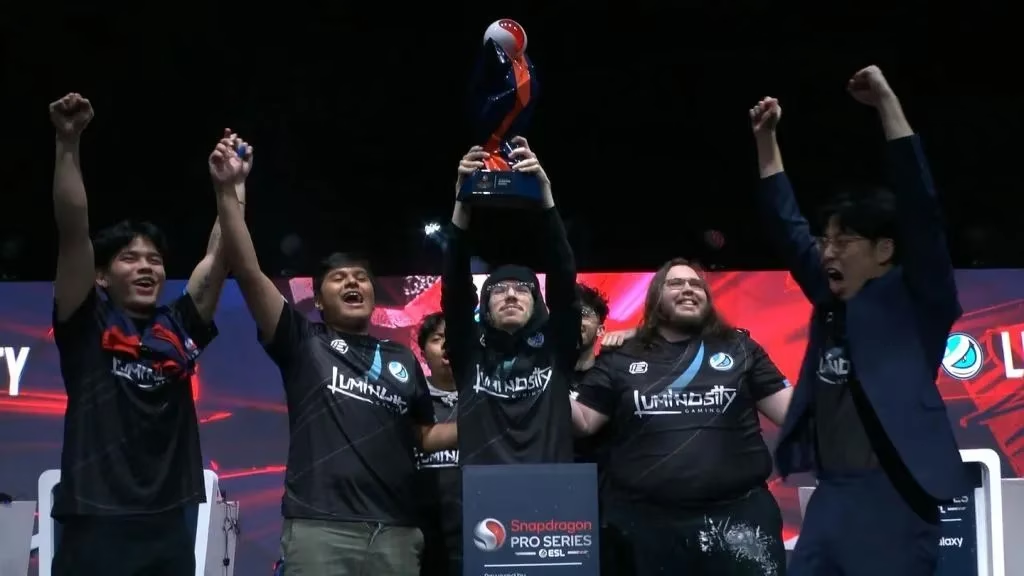
Once the dust settled on the qualifiers, the Open Finals ignited like a powder keg. A best-of-three double-elimination bracket doesn’t forgive hesitation — one wrong rotation, one mistimed slide, and a team’s journey could end before the caster even finished hyping their name. The structure narrowed 128 squads to 16, and then, in a brutal shift, matches switched to a best-of-five gauntlet. That format change was no small detail; it separated the one-trick Loadout artists from the adaptive tacticians who could pivot strategies on the fly. When the final eight teams emerged, their relief was palpable. These eight had not only survived, but automatically punched their ticket to the Challenge Season — a phrase that quickly became a badge of honor across Discord servers and WhatsApp group chats.
The Challenge Season itself was less a stage and more of a trial by fire spread over weeks of relentless scrims and official matches. It tested mental stamina as deeply as raw gun skill. Rosters that coasted on highlight-reel S&D clutches suddenly had to demonstrate consistency in Hardpoint spawns, Control timings, and the sheer patience required to hold an angle for what felt like an eternity. Coaches revamped strats at 3 a.m., players burned through finger sleeves, and the community watched every stream as if it were a daytime drama with SMGs. Then came the Challenge Finals, a nerve-shredding checkpoint where the best of the best were sorted one last time, culminating in the grandest spectacle the series could offer — the Snapdragon Mobile Masters.
If the previous stages were chapters in a novel, the Mobile Masters was the explosive final page. Here, the stakes transcended regional pride and entered the realm of legacy-making. The tournament design achieved something splendid: it blended the accessibility of an open ecosystem with the ruthless efficiency of a professional circuit. Any squad could sign up via regional portals — Europe, Latin America, MENA, and beyond — and theoretically weave a Cinderella story straight into the history books. Who wouldn’t want a piece of that action? The registration links alone sparked a frenzy, crashing pages and prompting community managers to fire off rapid FAQ posts.
Looking back from 2026, the Snapdragon Pro Series Season 4 holds a special place in mobile esports memory. It didn’t just crown champions; it shaped the very blueprint that subsequent seasons would refine. The tales of unknown rosters toppling established titans in the Open Finals still get retold in tournament lobbies today. The event proved that a well-structured path from Ranked queues to a world-stage final can thrive even in the palm of your hand. More than a competition, it was a statement — that Call of Duty Mobile’s competitive soul beats as fiercely as any PC or console counterpart.
So, whether you were a competitor who lived through every heart-stopping Search & Destroy round, or a viewer who lost sleep watching bracket resets, Season 4 pitched an unforgettable tent in the global esports landscape. As new seasons continue to evolve the format, the echoes of that fierce, Snapdragon-powered journey remain. The ladder is still there, waiting for the next set of dreamers to climb, and the memory of Season 4 serves as both inspiration and warning — because in this arena, glory isn’t given, it’s taken.