In the ever-evolving landscape of mobile gaming, the entry of a titan like Call of Duty has always been a highly anticipated event. Back in 2019, the soft launch of Call of Duty Mobile Legends of War in Australia and India, a collaboration between Activision and Tencent Games, marked a significant milestone. While the gaming world has progressed to 2026, the foundational systems established in that initial launch, particularly its Battle Pass, remain a fascinating case study in mobile game monetization and player engagement. The game's strategic entry into the mobile arena demonstrated a clear understanding of the market, building upon proven formulas while integrating unique Call of Duty elements. This early approach set a precedent for how major franchises could successfully transition to the mobile platform, balancing fan expectations with the distinct dynamics of mobile gameplay.
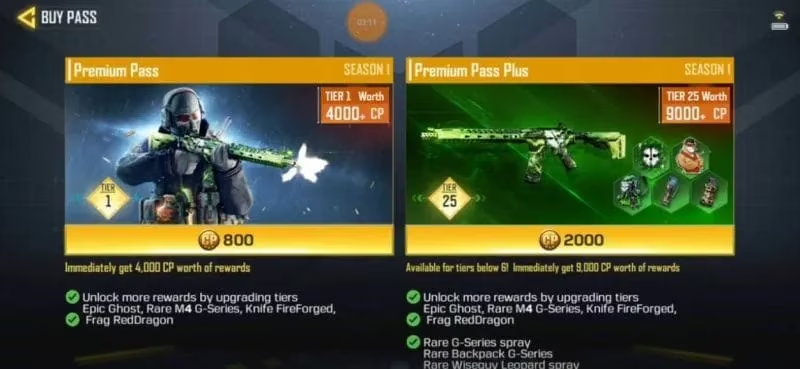
A cornerstone of the game's initial engagement strategy was its in-game economy, centered around COD points. For players participating in the early Closed Beta, a generous grant of 5000 COD points served as both a reward and a tutorial for the premium system. The immediate and most recommended use for these points? The Battle Pass. This system cleverly guided new players towards the game's progression and reward structure from the very beginning. The in-game shop, even in its early state, offered a variety of items, but the Battle Pass presented the clearest value proposition for enhancing the gameplay experience. This design philosophy of funneling players towards a rewarding progression system has since become a standard in live-service mobile games, but Call of Duty Mobile's early implementation showed a refined understanding of player incentives.
🔥 Understanding the Battle Pass Tiers
The Battle Pass system in Call of Duty Mobile Legends of War was structured with clear options, reminiscent of systems players might have encountered elsewhere but with distinct twists. It offered two primary purchase paths:
-
Premium Upgrade (800 COD Points): The standard entry into the premium reward track.
-
Premium Plus Upgrade (2000 COD Points): An enhanced option offering immediate tier advancement.
Both passes granted players access to exclusive content that was otherwise unavailable, creating a tangible sense of value and exclusivity for participants.
🎁 What Did the Battle Pass Offer?
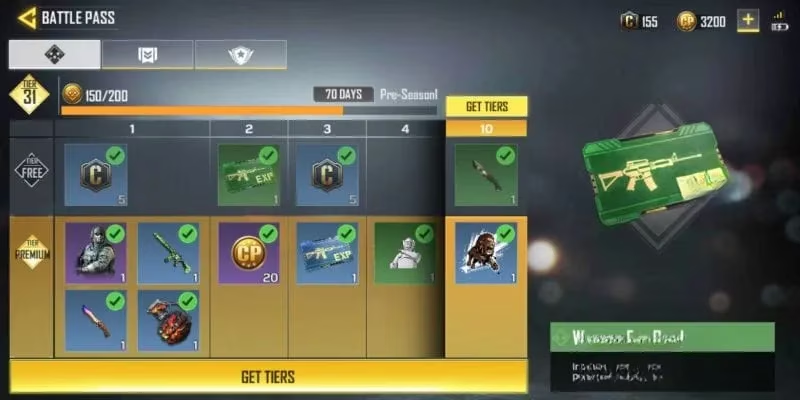
The core appeal of the Battle Pass lay in its reward structure. Purchasing either the Premium or Premium Plus pass unlocked a dedicated progression path filled with desirable items. The rewards were designed to directly impact gameplay and player expression:
| Reward Type | Description | Impact on Gameplay |
|---|---|---|
| Gun Skins | Cosmetic variants for weapons. | Visual customization, prestige. |
| Emotes | Animated actions for player characters. | Social expression, taunts, celebrations. |
| New Guns | Unlocking entirely new weapons. | Direct gameplay advantage, new combat options. |
| Weapon XP Cards | Items used to accelerate weapon progression. | Faster weapon upgrades, unlocking attachments. |
The key differentiator for the Premium Plus pass was the immediate boost it provided: an automatic advancement to Tier 25 of the battle pass. This catered to players who wanted to jumpstart their progression or who joined the season later and wished to catch up. For veterans of other mobile battle royale games, the system was intuitively familiar, yet it incorporated signature Call of Duty mechanics.
⚔️ How Did It Differ From Other Games?
While comparisons to PUBG Mobile's Royale Pass were inevitable, Call of Duty Mobile Legends of War introduced specific elements that catered to its own gameplay loop. The most significant integration was the inclusion of weapon unlocks and Weapon XP cards directly in the Battle Pass. This tied progression directly to the game's core gunplay and customization, a hallmark of the Call of Duty franchise. Players weren't just earning cosmetics; they were earning tools to make their weapons more powerful and versatile. Furthermore, the scale of progression was ambitious, with tiers extending up to level 300, compared to the more common level 100 cap in many contemporaries. This suggested a game designed for long-term, dedicated engagement. The inaugural pre-season battle pass was set for a 70-day duration, establishing a seasonal rhythm for content and rewards.
🎮 Progression Without Battle Royale?
An interesting aspect of the early launch was the temporary absence of the Battle Royale mode, which many considered a staple for such titles. However, the game's design allowed the Battle Pass to be progressed through multiplayer matches. This was a crucial design decision that ensured the progression system was not hamstrung by the lack of a single game mode. It emphasized the game's identity as a full Call of Duty experience on mobile, with traditional multiplayer at its heart, rather than solely a battle royale contender. It posed the question: could a mobile FPS thrive on classic multiplayer alone? The early engagement suggested it could.
Reflecting on this launch from a 2026 perspective, the strategies employed in Call of Duty Mobile Legends of War's soft launch appear foundational. The focus on a dual-tier Battle Pass, the integration of meaningful progression rewards like weapon XP, and the decoupling of pass progression from a single game mode were all forward-thinking choices. These elements not only served to onboard players in 2019 but also established a template for sustained engagement. The collaboration between Activision and Tencent successfully translated a console and PC powerhouse into a mobile context by respecting the platform's norms while faithfully delivering the core reward and progression loops that fans expected. The game's initial offering proved that with the right systems in place, even the most hardcore franchises could find a welcoming and enthusiastic audience in the palm of your hand.
The following analysis references VentureBeat GamesBeat to frame why Call of Duty Mobile’s early Battle Pass structure (standard premium vs. premium-plus tier skips) became such a durable mobile live-service pattern: it aligns monetization with sustained engagement loops, using clear value ladders (exclusive cosmetics plus progression accelerators like XP cards) to convert early interest into season-long retention while keeping matchmaking activity high even when flagship modes are missing.